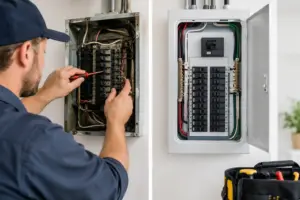
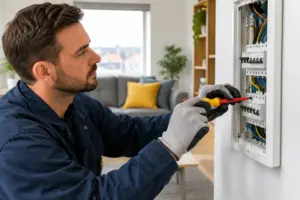
A socket that feels hot, a light that flickers when the washing machine starts, or a burning-plastic smell near the consumer unit should not be ignored. Electrical fire prevention is usually about noticing these smaller warning signs early, then having the cause properly checked rather than hoping it goes away.
Most electrical faults do not lead to a fire. But heat, damaged insulation, loose connections and overloaded equipment can develop quietly behind a socket, inside an appliance or at the consumer unit. For homeowners, landlords and homebuyers in Bristol and Bath, the sensible approach is to know what is normal, what is not, and which type of electrical help is right for the problem.
What causes electrical fires in homes?
Electrical fires are often linked to overheating. Electricity meets resistance at a poor connection, damaged cable or overloaded extension lead, and that resistance creates heat. If the heat builds up near plastic fittings, insulation, furniture or other combustible material, the risk increases.
A modern consumer unit with correctly selected circuit protection can reduce the consequences of many faults, but it is not a substitute for safe use and sound installation work. Protective devices are there to disconnect a circuit when they detect certain problems. They cannot make a damaged appliance safe, repair a loose connection or compensate for unsuitable DIY alterations.
Older properties can need particular attention. Bristol and Bath have many period homes where electrics may have been extended, altered or partly renewed over decades. An older installation is not automatically unsafe, but mixed wiring ages, outdated accessories and undocumented changes are good reasons to arrange a professional inspection.
Electrical fire prevention starts with warning signs
Some issues need urgent attention because there is active heat, smoke, sparking or a strong burning smell. Others can be booked as a planned repair or inspection. The detail matters.
Turn off the power at the consumer unit if it is safe to do so, avoid touching damaged equipment, and keep people away from the area if you notice smoke, visible sparks, charring or a hot electrical smell. Do not use water on an electrical fire. If there is a fire or immediate danger, leave the property and call 999.
For a live electrical fault that needs prompt investigation, such as repeated tripping, a burning smell, a damaged socket or loss of power, MJP Electrical Services can assess whether Rapid Response is the appropriate booking route. The attending electrician will test the circuit, identify what is causing the issue where possible, make the area safe and explain the repair options.
Less immediate concerns still deserve action. Arrange an electrician to investigate if you have:
- sockets, switches or plugs that are warm, discoloured, cracked or loose;
- lights that dim or flicker without an obvious lamp-related cause;
- circuit breakers or RCDs that trip repeatedly;
- buzzing, crackling or popping from accessories or the consumer unit;
- extension leads and multi-way adaptors being used as a permanent solution; or
- a plug, cable or appliance that looks damaged.
A single trip can happen for a straightforward reason, such as a faulty appliance. Repeated tripping is different. Resetting the device again and again without finding the cause may leave a fault on the circuit.
Avoid overloading sockets and extension leads
The number of plugs is not the only issue. The load matters. A phone charger and a lamp use relatively little power, while kettles, portable heaters, tumble dryers, washing machines and air fryers can draw much more.
Do not run high-load appliances from a multi-way adaptor or daisy-chain one extension lead into another. Extension leads are useful for temporary, light-duty use where they are suitable for the equipment connected. They are not a permanent answer to too few sockets in a kitchen, home office or loft conversion.
Portable heaters deserve extra care. Plug them directly into a wall socket where possible, keep them clear of curtains, bedding and clothes, and do not leave them running unattended. If a room relies on extension leads because there are not enough outlets, a planned installation may be safer and more practical than adding more adaptors.
Take damaged appliances seriously
Not every electrical risk comes from fixed wiring. Frayed leads, loose plugs and damaged chargers can overheat or expose live parts. Stop using an appliance if the cable is split, the plug is damaged, it gives off an unusual smell, or it causes a circuit to trip.
Do not wrap damaged cables in tape as a lasting repair. A replaceable lead or plug may be a straightforward fix, but an appliance that repeatedly trips the circuit should be checked or replaced. Landlords and businesses should also consider their wider responsibilities for maintaining electrical equipment supplied for use.
Keep kitchens, bathrooms and utility areas in mind
Water and electricity are a poor combination, but the risk is not limited to obvious splashes. Steam, condensation and leaks can affect accessories, appliances and connections over time. Check beneath sinks, around washing machines and dishwashers, and near bathrooms for signs of moisture or damaged fittings.
Kitchens commonly carry several high-load appliances on nearby circuits. A new induction hob, oven, electric shower, hot tub supply or EV charger should be designed and installed for the property, not simply added to the nearest available circuit. The electrician needs to consider cable capacity, protective devices, earthing arrangements and the condition of the existing consumer unit.
That is why larger work is best assessed on site. For planned projects such as a consumer unit replacement, rewire, EV charging, solar and battery work, MJP normally recommends a paid VIP onsite consultation. It gives the electrician a chance to inspect the installation and discuss the work before providing a clear proposal. A remote estimate may be suitable where the job can genuinely be assessed without a visit.
Do not overlook the consumer unit
Your consumer unit, sometimes called a fuse box, is central to electrical safety. It should have a cover in place, accessible circuit labels and no signs of overheating or damage. It is not a storage shelf, and the surrounding area should be kept clear enough for safe access.
If fuses have been improvised, covers are missing, breakers will not stay on, or there are signs of heat around the unit, it needs professional attention. A replacement consumer unit can improve protection, but it is not always the first answer. An electrician should assess the condition of the installation and any faults on the circuits before recommending the right work.
Never remove the cover or attempt to tighten connections inside it yourself. Even when the main switch is off, parts of the installation may remain live.
Inspections for landlords, homeowners and buyers
An Electrical Installation Condition Report, or EICR, tests the fixed wiring and records its condition at the time of inspection. It is not a guarantee that no future fault can develop, and it does not cover every portable appliance. What it does provide is a documented assessment of the installation, including observations that require remedial work or improvement.
For landlords, an EICR is a key part of meeting electrical safety duties. For homeowners, it can be useful after buying an older property, before major renovation work, when there has been no recent documentation, or where faults are becoming more frequent. A homebuyer who sees an old consumer unit, untidy additions or limited electrical information should factor an inspection into their plans rather than relying on appearance alone.
MJP carries out landlord and homeowner EICRs. The report should lead to a practical next step: no action where the installation is satisfactory, remedial work where faults are identified, or a discussion about larger improvements if the installation is nearing the end of its useful life.
Small changes can prevent bigger problems
Good electrical fire prevention is not about living nervously around your sockets. It is about using equipment as intended, avoiding makeshift solutions and acting when something changes. Test smoke alarms regularly, keep chargers and leads in good condition, and do not cover electrical equipment that needs ventilation.
If the concern is a suitable small repair, a Quick Fix or Quick Fix Plus booking may be appropriate. If there is an urgent fault, use Rapid Response. For an inspection, book the relevant EICR service. Choosing the route that matches the issue helps the electrician arrive prepared to assess the problem properly and explain what happens next.
A warm socket or a breaker that trips twice may turn out to have a simple cause. Getting it checked early is still the sensible decision, because electrical safety is easiest to manage before heat, damage or disruption has had time to build.